Last updated:
A1C and Anemia: Why Results Can Be Falsely High or Low
Iron deficiency anemia can make A1C falsely high, while hemolytic anemia can make it falsely low. The safest check is to compare A1C-derived eAG with your CGM or meter average.
There is no universal A1C correction formula for anemia. The effect depends on the type and severity of anemia, red blood cell lifespan, and the lab method used. If your A1C does not match your glucose data, compare the numbers and discuss the gap with your clinician.
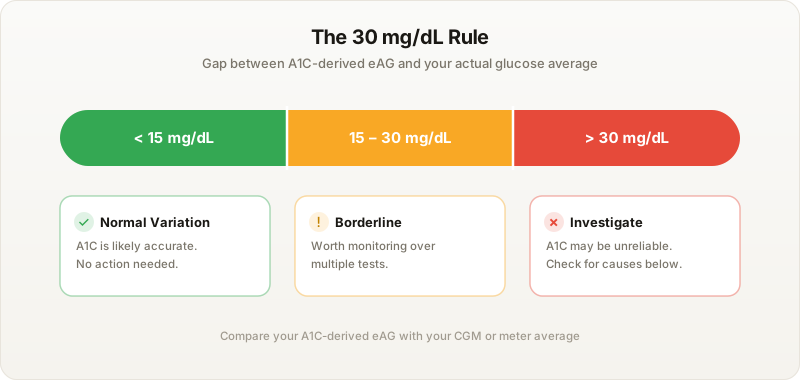
The rule: if your A1C-derived eAG differs from your actual glucose average (from a meter or CGM) by more than 30 mg/dL, your A1C may be unreliable.
Convert your A1C to eAG and compare it to your real glucose data. That comparison is the single fastest way to check if your A1C is telling the truth.
Quick answer:
- A1C is reliable for the majority of people
- It becomes inaccurate when red blood cell lifespan or hemoglobin structure is abnormal
- A gap of >30 mg/dL between your A1C-derived eAG and your CGM/meter average is a red flag
- The most common cause of a falsely high A1C is iron deficiency anemia
- The most common cause of a falsely low A1C is hemolytic anemia
Why Is My A1C Higher Than My Blood Sugar?
The most common reason your A1C is higher than your blood sugar is iron deficiency anemia. Low iron causes red blood cells to live longer, so they accumulate more glycated hemoglobin. Studies show this can inflate A1C by 0.4–0.7% without any change in actual blood sugar (English et al., 2015).
What this looks like: your meter averages 120 mg/dL, but your A1C says 6.6% (eAG ~140 mg/dL). After iron repletion, A1C drops to 6.0% — your glucose never changed.
Other causes of a falsely high A1C:
- B12 or folate deficiency — same mechanism, RBCs live longer
- Splenectomy — no spleen to clear old cells
- Chronic kidney disease (without EPO) — carbamylated hemoglobin mimics glycated hemoglobin
- Very high triglycerides — interferes with some lab assays
Why Is My A1C Lower Than Expected?
The most common reason your A1C is lower than expected is hemolytic anemia — conditions that destroy red blood cells faster than normal, cutting short the time for glycation. A falsely low A1C is dangerous because it masks hyperglycemia.
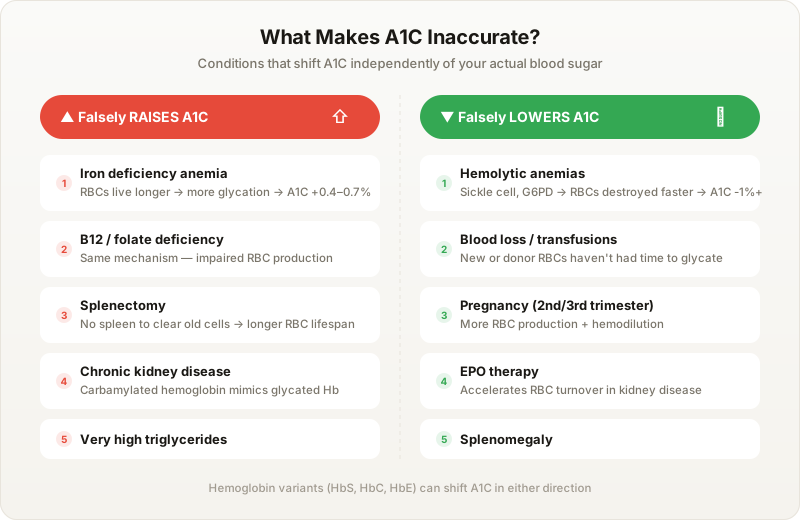
Conditions that pull A1C down:
- Hemolytic anemias — sickle cell disease can understate A1C by 1% or more (Lacy et al., 2017). Also G6PD deficiency, hereditary spherocytosis
- Blood loss or transfusions — new or donor RBCs haven’t had time to glycate
- Pregnancy (2nd/3rd trimester) — more RBC production + hemodilution
- EPO therapy — accelerates RBC turnover in kidney disease
- Splenomegaly — enlarged spleen destroys RBCs faster
A1C vs. CGM: Which One Is Right?
Neither is “wrong” — they measure different things. CGM tracks glucose directly. A1C infers glucose from hemoglobin glycation. The gap between them reveals biology, not error.
Why they diverge:
- Your personal glycation rate — the ADAG formula is a population average. Your body may glycate hemoglobin faster or slower than average at the same glucose level.
- Race and ethnicity — at the same mean glucose, A1C runs 0.2–0.4% higher in Black individuals and 0.1–0.3% higher in Hispanic individuals (Bergenstal et al., 2017). This is biological, not a lab error.
- Hemoglobin variants — HbS, HbC, HbE can shift A1C unpredictably depending on your lab’s assay. Check the NGSP interference database.
- CGM coverage — incomplete sensor wear means the CGM average isn’t your true average either.
When A1C and CGM disagree by more than 0.5%, investigate rather than assume one is simply correct.
How to Tell If Your A1C Is Wrong
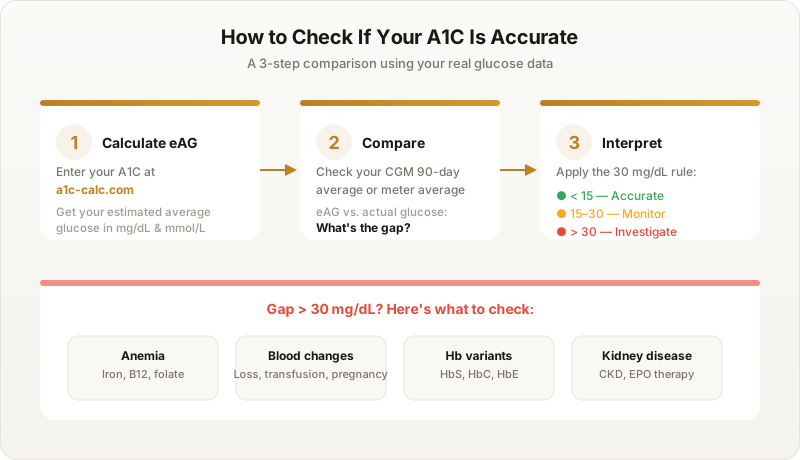
Step 1: Calculate your eAG. Enter your A1C at a1c-calc.com to get your estimated average glucose in mg/dL and mmol/L.
Step 2: Compare to your real data. Look at your CGM 90-day average or your meter average over the past 2–3 months.
Step 3: Check the gap. A gap above 30 mg/dL between A1C-derived eAG and measured glucose is generally considered clinically significant.
| Gap Between eAG and Actual Average | What It Means |
|---|---|
| < 15 mg/dL | Normal variation — A1C is likely accurate |
| 15–30 mg/dL | Borderline — worth monitoring over multiple tests |
| > 30 mg/dL | Your A1C may be unreliable — investigate causes |
Step 4: Screen for causes. If the gap is significant, check for: anemia (iron, B12, folate), recent blood loss or transfusions, hemoglobin variants, chronic kidney disease, pregnancy.
Step 5: Ask about alternatives. When A1C is unreliable, fructosamine (2–3 week glucose window, unaffected by hemoglobin) or CGM-based GMI (calculated from measured glucose) are the best replacements. Bring your data to your provider.
| Falsely Raises A1C | Falsely Lowers A1C |
|---|---|
| Iron deficiency anemia | Hemolytic anemias (sickle cell, G6PD) |
| B12 / folate deficiency | Blood loss or transfusions |
| Splenectomy | Pregnancy (2nd/3rd trimester) |
| Chronic kidney disease (without EPO) | EPO therapy |
| Hypertriglyceridemia | Splenomegaly |
Hemoglobin variants (HbS, HbC, HbE) can push A1C in either direction depending on the lab method. This 30 mg/dL threshold is widely used in clinical comparisons between A1C and directly measured glucose.
What You Should Do Right Now
If you’ve ever felt your A1C doesn’t match how you actually feel — or what your CGM shows — this comparison is where to start.
- Calculate your A1C → eAG — takes 5 seconds
- Compare it to your CGM or meter average — is the gap under or over 30 mg/dL?
- If the gap is large — review the conditions above and bring the comparison to your next appointment
Your A1C is one number. Your glucose data is thousands of numbers. When they disagree, the data usually wins — but you need both to know the full picture.
Sources
- English E, Idris I, Smith G, Dhatariya K, Kilpatrick ES, John WG. The Effect of Anaemia and Abnormalities of Erythrocyte Indices on HbA1c Analysis: A Systematic Review. Diabetologia. 2015;58(7):1409-1421.
- Lacy ME, Wellenius GA, Sumner AE, et al. Association of Sickle Cell Trait With Hemoglobin A1c in African Americans. JAMA. 2017;317(5):507-515.
- Bergenstal RM, Gal RL, Connor CG, et al. Racial Differences in the Relationship of Glucose Concentrations and Hemoglobin A1c Levels. Ann Intern Med. 2017;167(2):95-102.
- Nathan DM, Kuenen J, Borg R, et al. Translating the A1C Assay Into Estimated Average Glucose Values. Diabetes Care. 2008;31(8):1473-1478.
- American Diabetes Association Professional Practice Committee. Glycemic Goals and Hypoglycemia: Standards of Care in Diabetes—2024. Diabetes Care. 2024;47(Suppl 1):S111-S125.
This article is for informational purposes only and does not constitute medical advice. Always consult your healthcare provider for diagnosis and interpretation of lab results.